
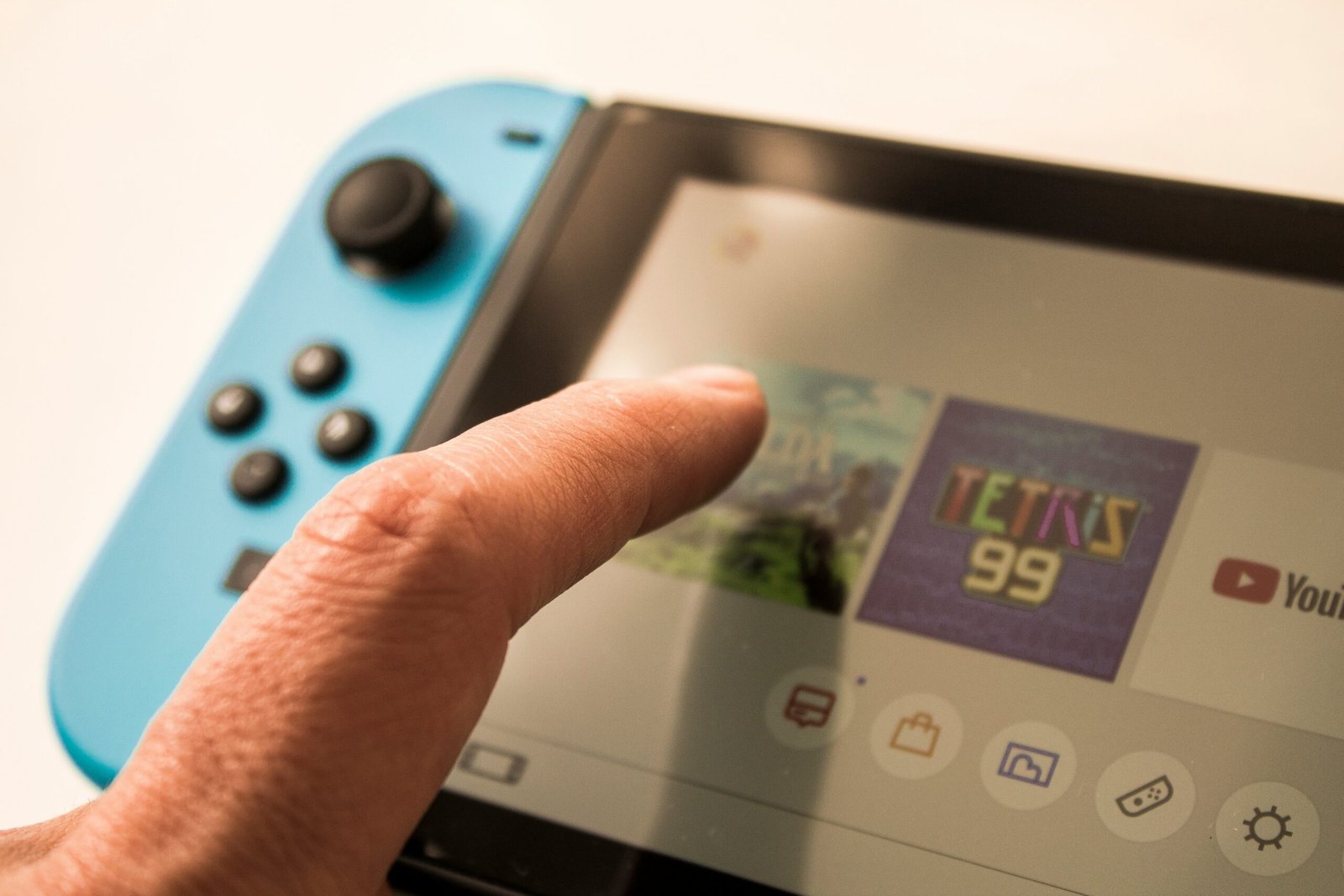
After buying The Legend of Zelda: Tears of the Kingdom in 2024, I have finally beaten the final boss.
It took me a couple of years, although not because I spent all that time carefully completing every shrine, finding every Korok or uncovering every corner of Hyrule. I did spend plenty of time exploring, but eventually I reached the underground section beneath Hyrule Castle and found it too difficult to continue.
The enemies were tougher, resources became more important and I realised that I hadn’t properly learned how to fight.
I could get through ordinary encounters well enough, but I had relied heavily on improvising, avoiding difficult enemies and hoping for the best. That approach had carried me through much of the game, but it wasn’t going to carry me all the way to Ganondorf.
So I put the game back on the shelf.
Returning to Hyrule
When I eventually returned, I approached it differently. I spent time learning how to fight enemies properly rather than treating every encounter as something to survive through luck.
I became more confident with dodging, timing attacks and using the equipment and abilities available to me. Things that had previously felt frustrating gradually became manageable. Nintendo has published a useful spoiler-free collection of tips for starting and exploring Hyrule, although my real problem was that I had spent far too long avoiding situations that would have forced me to improve.
Then I went back beneath Hyrule Castle.
I won’t turn this into a detailed account of the final battle because anyone who has managed to avoid spoilers this long probably wants to experience it for themselves. What mattered to me was that I finally completed something I had started years earlier.
I was happy. There was satisfaction in knowing that I hadn’t simply abandoned the game permanently when it became difficult. I had returned, improved and finished it.
It also made me think about why some games keep me interested while others quietly lose me.
I need something to work towards
I’ve recently been playing Pokémon Pokopia. At first, I really enjoyed it.
There was always something to work towards. The story gave me objectives, the world gradually developed and new Pokémon introduced useful abilities. I became particularly focused on unlocking Magnemite because it makes building easier.
That became my goal.
I pushed further through the story because I wanted to find Magnemite and gain access to what it could do. Magnemite teaches Ditto the Magnet Rise transformation, which allows you to hover while placing and moving objects. It effectively becomes a more convenient building mode.
When I finally reached that point, it should have opened up more possibilities. Technically, it did. Building became much easier and I had more freedom to shape the world.
But I got bored soon afterwards.
My husband has had almost the opposite experience. He is obsessed with Pokopia. He loves creating houses, building new areas and finding inspiration from other players’ creations on Instagram. The freedom to decide what to make next is exactly what keeps him playing.
I can see why he enjoys it. There’s something satisfying about spotting an idea online, adapting it and gradually turning an empty area into a properly designed place. He can look at all those building tools and immediately see possibilities.
I tend to look at the same tools and wonder what the game wants me to do with them.
The problem isn’t that Pokopia has nothing left in it. My husband’s experience proves otherwise. There are still things to build, arrange, collect and improve. The difference is that he enjoys creating his own objectives, while I need the game to provide more of that direction.
I had worked towards Magnemite because the game had made it feel useful. Once I had it, the next step was largely up to me. I could create something impressive, but I would have to decide what it was, plan it and invest the time required to make it.
For my husband, that freedom is the reward. For me, playing started to feel less like progressing through a game and more like giving myself another project.
Tomodachi Life is funny, but its world feels empty
I have a similar problem with Tomodachi Life: Living the Dream.
The game is funny. Its strange situations can be genuinely entertaining, particularly when I show them to other people. Watching Miis based on people you know form friendships, argue, fall in love or behave ridiculously has an obvious appeal.
It’s the kind of game that can be more amusing when somebody else is sitting beside you asking why a particular Mii is doing something completely absurd.
But once that initial amusement wears off, I’m not sure what I’m supposed to be working towards.
I’ve seen videos showing the elaborate islands other players have created. Some of them look brilliant. Their buildings, decorations and layouts make the island feel carefully designed and personal.
I also know that I don’t have the time or motivation to do all that myself.
Creating an impressive island requires imagination, planning and patience. The game provides the tools, but it expects the player to supply much of the purpose. If I don’t spend hours designing everything, the island can feel strangely lifeless.
This seems to be a deliberate part of the game’s design. In an interesting interview with the developers, they discuss designing the game around things created by players and the possibility of people continuing to discover new ways to enjoy it.
That approach clearly works for people who love creating their own islands, objects and situations. For me, it helps explain why the game can start feeling empty. The creative possibilities are there, but I don’t always want to do all the creative work myself.
That’s where I begin comparing it with The Sims 2.
Why The Sims 2 still works for me
The Sims 2 doesn’t have a final boss or a conventional ending. A neighbourhood can continue for as long as you want it to. Families grow, generations replace one another and new stories emerge from whatever happens next.
Yet I rarely feel that the game gives me absolutely nothing to do.
The wants and fears system makes a huge difference. Sims don’t simply exist in a house waiting for me to invent a purpose for them. They want things, and those wants provide smaller objectives that can develop into larger stories.
My favourite aspiration is Knowledge. I enjoy helping Knowledge Sims build their skills and become increasingly capable. Their wants give me a straightforward sense of progress, but they also suit the personalities I enjoy playing.
I like Fortune Sims for similar reasons. Helping a Sim advance through a career and become rich gives the household a direction. Better jobs lead to more money, more money changes the house and the Sim’s circumstances gradually improve.
Romance Sims are enjoyable for a completely different reason: drama.
Their wants can disrupt relationships, create arguments and turn an otherwise stable neighbourhood into chaos. I may not always want my Sims to make sensible decisions. Sometimes their bad decisions are what make the game interesting.
The important thing is that all these aspirations generate movement. My Sims are developing their lives, even when that development is disastrous.
The problem with Pleasure Sims
Pleasure Sims, however, are really boring.
Their wants are often based on whatever will entertain them immediately. They want to play games, relax, change into their pyjamas or do some other small activity that doesn’t lead anywhere.
There’s nothing wrong with wanting to enjoy yourself. If I were a Sim, I’d probably want plenty of time to relax too. But from the player’s perspective, those wants don’t create much of a story.
A Knowledge Sim wanting to gain another skill point gives me something to build towards. A Fortune Sim wanting a promotion can change the household’s financial situation. A Romance Sim wanting another relationship creates consequences.
A Pleasure Sim wanting to play darts is just a Sim playing darts.
The game is technically giving me an objective, but completing it rarely changes anything. It feels more like clearing a notification than progressing through someone’s life.
When hobbies take over everything
The wants system also becomes less interesting when my Sims’ wants start revolving almost entirely around the hobbies introduced in The Sims 2: FreeTime.
The expansion added ten hobby interests, including film and literature, cuisine, fitness, games, music and dance. The system can be enjoyable, especially when a hobby fits the personality and existing interests of a particular Sim.
The trouble comes when a Sim discovers a hobby and it starts dominating their wants.
Suddenly, a character who previously wanted to develop a relationship, advance through a career or improve an important skill seems interested mainly in doing another hobby activity, talking about the hobby or interacting with the hobby system in some other way.
It can make different Sims feel less distinct. Their aspirations and circumstances are pushed aside by the same stream of hobby-related wants.
Once that happens, the wants system stops doing what I enjoy about it. It continues providing tasks, but those tasks no longer feel meaningful. They don’t take the Sim’s life anywhere particularly interesting.
There’s a difference between having objectives and having objectives that create momentum.
The later Sims games
I enjoyed The Sims 3 as well. Its open world and wider systems gave me plenty to explore, but the performance problems eventually became too frustrating. The lag bothered me enough that I stopped playing.
The Sims 4 has never held my attention in quite the same way.
One problem is that its Sims don’t seem to do enough independently. In The Sims 2, I can allow situations to develop and watch Sims make decisions that create unexpected results. In The Sims 4, I often feel that I need to direct too much myself.
Interactions can also feel slow. Getting Sims to speak to one another and develop relationships sometimes feels as though it takes longer than it should. Instead of watching a lively household develop, I feel like I’m repeatedly instructing characters to do basic things and waiting for them to catch up.
I’m clearly not the only player who has concerns about autonomy. EA’s 2026 quality-of-life roadmap specifically identifies Sim autonomy as an area being investigated and improved in response to player feedback.
That doesn’t necessarily address my broader feeling that Sims need more independence and spontaneity, but it shows how central autonomy is to whether the simulation feels alive.
When the Sims themselves aren’t producing enough interesting behaviour, more of the responsibility falls on me. I have to decide what the story is, create the circumstances and keep pushing everyone through it.
Again, the game starts to feel like work I have assigned to myself.
Freedom isn’t always enough
People often praise games for giving players freedom, and understandably so. Nobody wants to feel trapped in a narrow sequence of instructions with no room to make decisions.
But freedom on its own doesn’t necessarily keep me interested.
Pokopia gives me the freedom to build, which my husband loves because he enjoys inventing his own projects. I enjoy that freedom for a while, but eventually I need the game to give me another reason to use it. Tomodachi Life gives me the freedom to design my island and populate it with almost anyone. The Sims gives me the freedom to create people, homes and stories.
The question is what each game does with that freedom.
A good simulation game doesn’t need to dictate everything, but I think it needs to meet the player halfway. It should generate situations, ambitions or problems that encourage me to make decisions. My choices need something to react to.
That’s why The Sims 2 remains so effective. I’m controlling the Sims, but their wants, fears, personalities and relationships push back. I don’t have to invent every objective from nothing.
It’s also why Tears of the Kingdom kept enough of a hold on me that I eventually returned. Hyrule offered enormous freedom, but there was still a central threat and a final destination. I always knew what Link was ultimately meant to do, even when I spent months avoiding it.
When playing starts to feel like wasting time
When a simulation game stops giving me meaningful objectives, I generally don’t create my own challenge or force myself to continue. I just stop playing.
Part of that is because I begin to feel as though I’m wasting time.
I don’t believe games need to improve me, teach me something or produce a useful result. Entertainment has value by itself. Resting and enjoying something isn’t a waste simply because it isn’t productive.
But the game does need to entertain me.
If I’m staring at a virtual island trying to invent a reason to move its furniture around, I start thinking about everything I could be doing in my real life. I could work towards a personal goal, improve something around my actual home or spend time on something that will still matter once I turn the console off.
The balance changes when the game expects me to supply nearly all the imagination, effort and purpose. Instead of escaping from responsibility for a while, I’ve given myself another responsibility inside a virtual world.
I don’t need every game to have an ending
Finishing Tears of the Kingdom hasn’t convinced me that every game needs a final boss. I don’t need Ganondorf to appear in Tomodachi Life, although that would certainly make the island less lifeless.
What I need is a sense that something is happening because I’m playing.
That could mean completing a story, overcoming a difficult battle or finally reaching a destination. It could also mean helping a Knowledge Sim master their skills, making a Fortune Sim rich or watching a Romance Sim destroy several relationships in one afternoon.
The objective doesn’t have to be enormous. It simply needs to create progress, change or consequences.
When a game gives me that, I can spend hours in it.
When it gives me an empty space and expects me to provide all the purpose myself, I increasingly find it easier to put the controller down.
Leave a Reply