
Why I don’t use AI-generated images of sign language
Today, I was creating a set of simple preview images for some workplace guidance documents. Most were straightforward: an envelope for an email guide, a browser window for web guidance and a video screen for an accessible BSL video checklist.
Then the AI started generating hands.
If you’ve ever asked an AI image generator to depict sign language, you can probably guess what happened. Fingers multiplied. Joints appeared where joints shouldn’t exist. Hands melted into each other. Some gestures looked vaguely intentional but meant absolutely nothing.
This is a recognised technical weakness rather than something people have collectively imagined. Researchers developing HandCraft, a system for repairing malformed hands in AI-generated images, describe text-to-image models as surprisingly poor at rendering hands, often producing anatomically incorrect results.
I eventually gave the image generator a very clear instruction: don’t show any hands at all.
That sounds slightly absurd when the image is meant to represent a BSL video, but it was the safest option. A person appearing on a video screen communicates the idea perfectly well. There’s no need to invent a fake sign and hope nobody notices.
Looking convincing isn’t the same as being correct
AI-generated hands have become a running joke because they’re often anatomically bizarre. The technology is improving, but an anatomically plausible hand doesn’t automatically make an image of sign language accurate.
A generated image might show five perfectly formed fingers and still depict complete nonsense.
For someone who doesn’t sign, the result may look convincing enough. The person has their hands raised, so the image reads as ‘sign language’. A BSL user may immediately see an impossible handshape, meaningless movement or something that accidentally resembles an entirely different sign.
That difference matters. BSL isn’t a collection of dramatic hand gestures that can be approximated for decoration. It’s a language, formally recognised in UK law through the British Sign Language Act 2022.
The hands are only part of it, too. As the British Deaf Association explains, meaning in BSL is created through the relationship between handshape, movement, location, orientation, facial expression, body posture and the use of space. These elements work together rather than functioning as separate decorative gestures.
Research also demonstrates how important these features are. A study of spatial processing in BSL discusses how the configuration and location of the hands in signing space can represent objects, people and actions. Separate research into mouthings in British Sign Language shows that mouth patterns also form part of how BSL is produced and understood.
A still image removes movement and much of this wider context before an image generator has even had the opportunity to get anything wrong.
The problem existed before generative AI
This isn’t entirely a new issue.
Stock photography labelled ‘sign language’ sometimes features models making isolated or unrecognisable gestures. The pictures may look convincing to someone who doesn’t sign, but they don’t necessarily show a meaningful sign or natural signed conversation.
AI has simply made it faster and easier to produce more of the same.
It also introduces a strange confidence problem. A polished illustration can look authoritative. Smooth lighting, attractive colours and neatly composed figures make the image feel deliberate, even when the signing itself is gibberish.
The better the image looks, the easier it may be for somebody unfamiliar with BSL to assume it must be accurate.
My extremely simple workaround
When I need an image representing BSL, I use real photographs or videos of people who actually sign wherever possible. For a more general graphic, I show the context without attempting to reproduce a particular sign.
That might include:
- a person appearing on a video screen;
- a camera, play button or video interface; or
- deaf people communicating without focusing on a particular handshape.
This leaves plenty of room to create something visually interesting without manufacturing fake language.
Stock photography about sign language often focuses tightly on hands, sometimes removing the signer’s face and the wider context. But facial expression, body movement and signing space are all part of BSL, so a pair of hands alone rarely represents the language properly.
AI can help, but somebody still has to take responsibility
I use AI tools regularly. They can be useful for exploring concepts, testing layouts and producing the foundations of an image. I’m not interested in pretending the technology has no value simply because it makes mistakes.
But the person using the tool is still responsible for what they publish.
If an AI-generated image contains incorrect or meaningless signing, ‘the AI made it’ isn’t much of an excuse. Someone chose the prompt, accepted the result and put it in front of an audience.
That means knowing when you can assess an output yourself and when you need somebody with the relevant knowledge to check it. It also means recognising when the easiest solution is to remove the questionable element altogether.
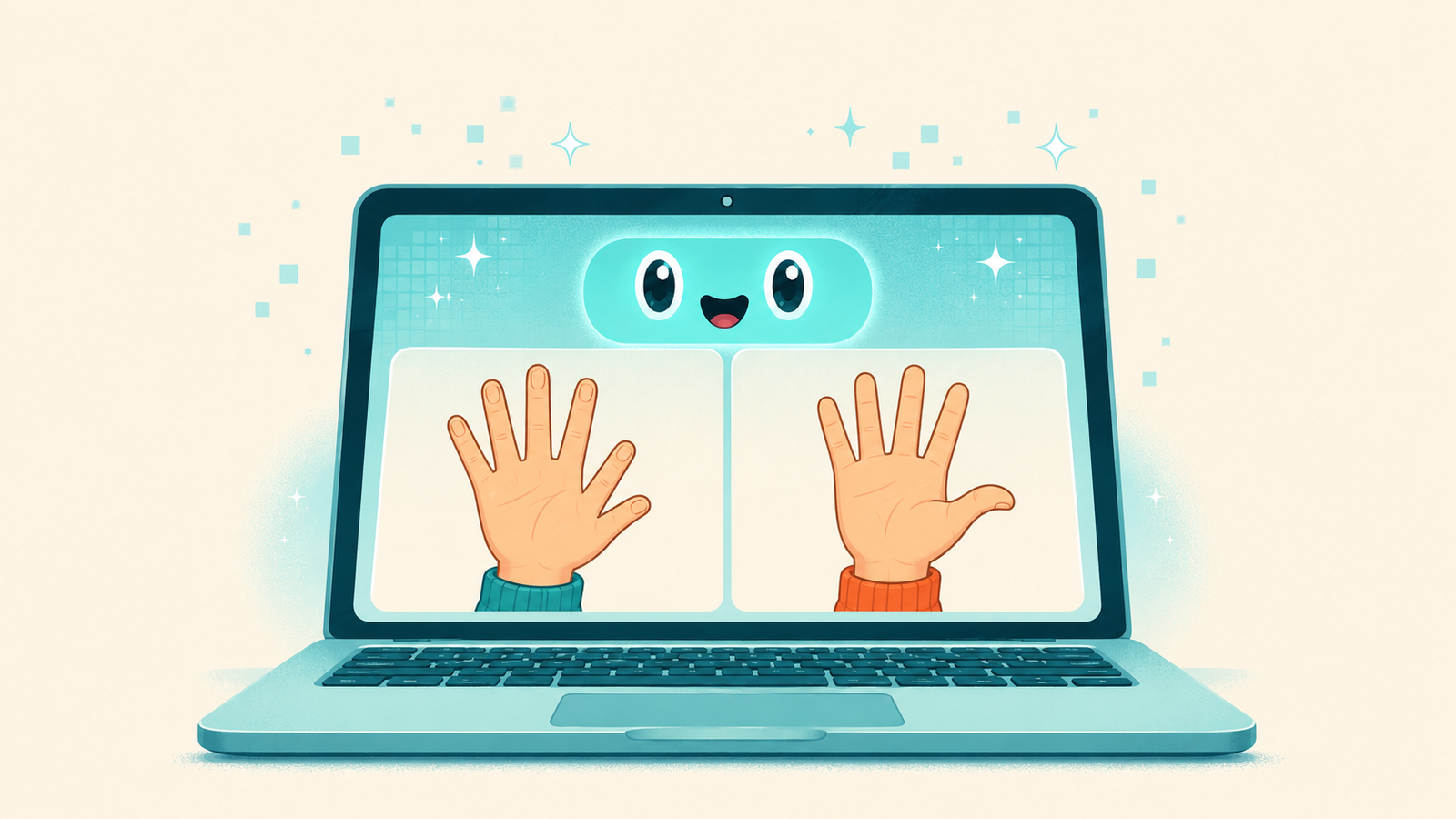
So yes, the featured image for this post contains a hand with too many fingers. That’s the joke.
For anything genuinely representing BSL, I’ll be keeping AI-generated hands firmly out of the picture.

Leave a Reply